

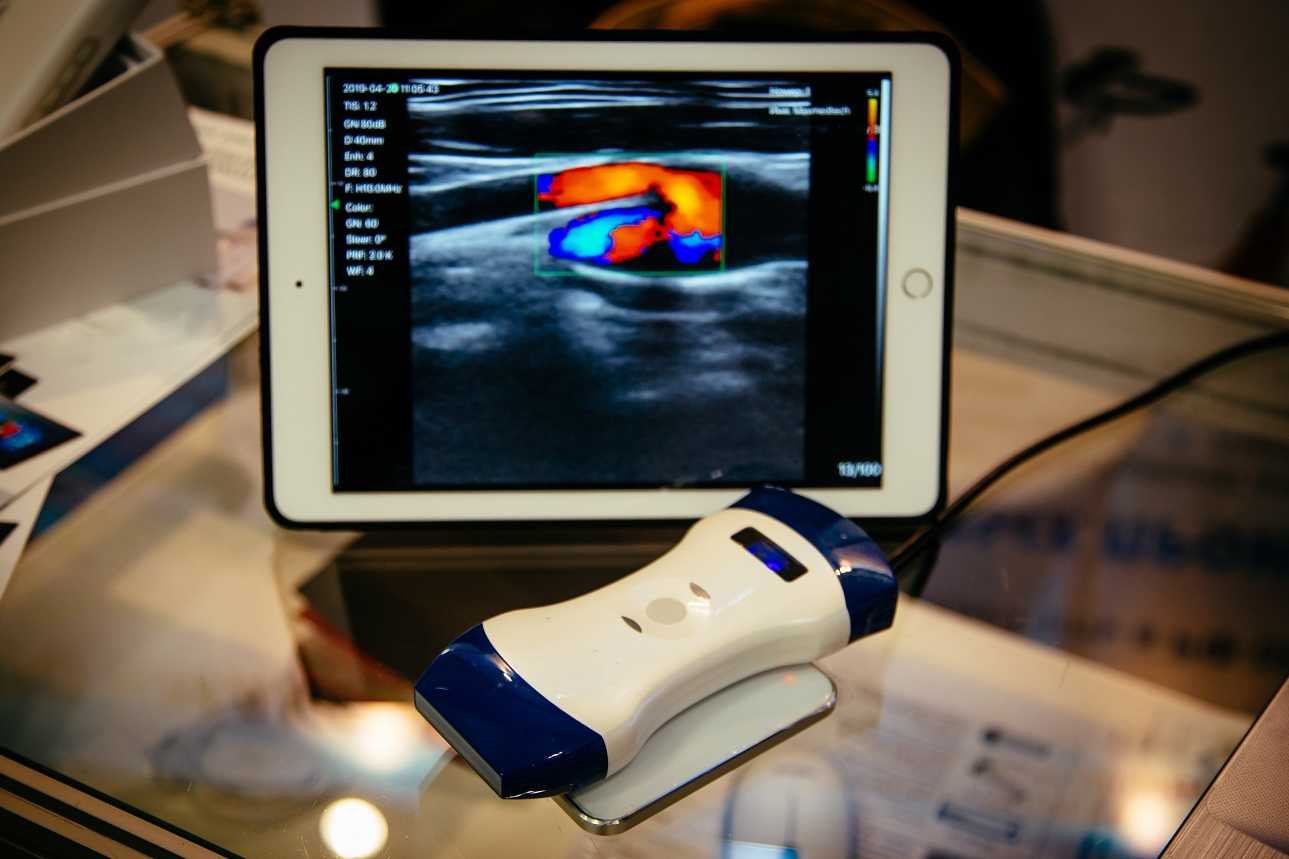
Handheld ultrasound device systems are emerging as a transformational force in healthcare. Portable handheld ultrasound devices are compact, easy to use, and lightweight.
They help medical professionals with point-of-care (PoC) imaging. These devices improve patient diagnostics and monitoring. This leads to better care quality.
Point-of-care ultrasound (POCUS) is useful in medical facilities, hospitals, and emergency care. You can also use it at the bedside. POCUS helps doctors accurately diagnose injuries and conditions. Monitoring chronic illnesses is also good.
People can use accurate PoC diagnostics in rural areas and emergencies. This includes use by first responders to give quick care to patients in crisis.
These advantages have driven a surge in market growth that experts expect to continue. In 2023, analysts valued the global market for handheld ultrasound devices at $298.2 million. Analysts expect it to grow at a rate of 5.6% each year from 2024 to 2030. Market growth comes from new healthcare technology and more people having chronic diseases as the population ages.
Healthcare facilities planning to invest in handheld ultrasound systems need expansive data to guide purchasing decisions. Our guide to the best handheld ultrasound systems in 2026 compares key features of the Butterfly IQ+, VScan Air SL, and Te Air devices. This will help you choose the best option for your facility.
How Does a Portable Ultrasound Machine Work?
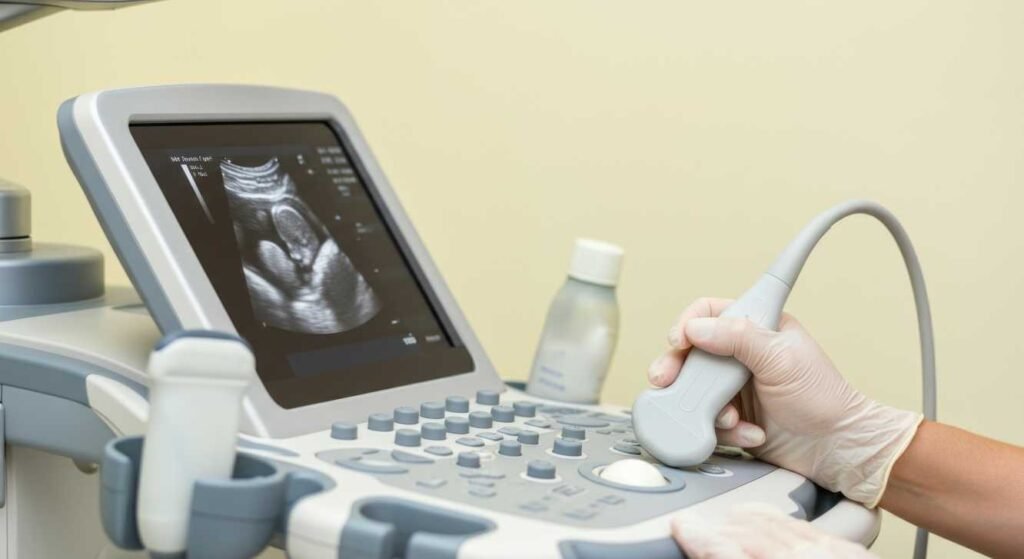
Portable ultrasound machines work the same way regular ultrasound machines work but without the burden of a large console. Ultrasound machines send beams of ultrasound waves (sound waves) into the body. The echoes of these waves generate electrical signals to create images of tissues and organs inside the body.
A technician presses a handheld transducer (probe) against the patient’s skin using a portable ultrasound or a Wireless Handheld Ultrasound. Sound waves enter the body and bounce back to the transducer. This helps create images that show what is happening in the affected area.
Handheld ultrasound machines are typically compatible with smartphones, tablets, or other portable devices that display the resulting images. Some connect to the device with a USB cable, while others connect wirelessly.
 Is a Portable Ultrasound System Accurate?
Modern portable ultrasound systems work like traditional ultrasound machines and produce similar results. Researchers have completed various studies and randomized trials to test the accuracy of portable handheld ultrasound machines. The tests show that POCUS devices have diagnostic accuracy similar to cart-based models. Both provide exceptionally accurate results.
How to Choose the Right Handheld Ultrasound System for Your Practice
Most modern handheld ultrasound systems are convenient and accurate. However, different models have unique benefits. These advantages may be better for specific clinical specialties. Professionals can use handheld ultrasounds in clinical, emergency, and home care settings.
These changing environments and the needs of different medical specialties can affect which features are most essential for you to. First, define your needs for choosing the right ultrasound system for your practice. Then, compare different devices. This will help you find the features that best meet your requirements.

Defining Your Needs
Identifying your needs and expectations will help you define which features will provide the most value. Start by outlining your clinical applications and which systems are most likely to deliver accurate results.
For example, some specialties (musculoskeletal or dermatology) may require specific probe frequencies for those clinical needs. However, a system intended for general medicine will likely need a range of frequencies. Portability is key if you use your device in the field, such as as a first responder or in EMS. Ease of use will also be crucial.
Factors to Consider When Choosing the Best Handheld Ultrasound System
The ideal portable ultrasound system provides clear images and easy portability to improve accuracy and convenience in any medical environment. Consider how the following features will help you find a portable imaging solution that fits your needs.
- Image Quality: Good image quality helps you do many things. You can check heart function, measure a lump, or see bladder volume.
- Portability: Convenience is key for all portable devices. However, devices in the field or busy emergency rooms must be compact and lightweight.
- **Ease of Use: A simple system and interface is important. This is especially true if professionals with different experience levels will use the device.
- Versatility: Facilities that diagnose and treat many conditions need a device that works well in all medical areas.
- Probe Choice: The probe is a key component that should meet your frequency, shape, and size needs.
- Battery Life: Generally, a device should let medical professionals perform multiple consecutive exams without recharging. However, the device’s average lifespan can be more critical in field-based or busy practices.
- Compatibility: POCUS systems typically use tablets, smartphones, or other devices to share images. Ensure the system you choose is compatible with your existing devices.
- Cost: An investment should comfortably fit your budget and help you cut costs or gain valuable returns. Calculate upfront costs and future ROI to guide your decision.
- Ongoing Support: Before you buy, ask the provider about training, warranties, and software updates that come with the device.
Difference between Butterfly IQ+, GE VScan Air SL, and Mindray TE Air
The Butterfly IQ+, GE VScan Air SL, and Mindray TE Air are among the best handheld ultrasound systems in 2026. While they share many features, they also differ in key ways.
The systems are of different sizes, with TE Air being the most lightweight. Costs vary widely, with Butterfly being the most affordable. TE Air and VScan operate wirelessly, while the Butterfly IQ+ uses a wired connection.
Comparative Analysis: Butterfly IQ+, VScan Air SL, and TE Air
No single feature makes one portable ultrasound the best choice for all medical professionals. An in-depth investigation of performance factors, cost vs value, and application flexibility can help you determine which features best fit your needs.
Performance and Ease of Use
A portable ultrasound’s overall performance comes from image quality, speed, versatility, portability, and ease of use. While each system designer is created to meet these criteria, research shows that some devices excel in specific areas.
- Butterfly IQ+: The Butterfly IQ lets users take cardiac, abdominal, and surface images with one transducer. However, the image quality is slightly lower than other devices.
This device is not as easy to use as the VScan and Mindray. It lacks in physical features and maneuverability. However, users highly rate the software, making it a serious contender for easy use.
- VScan Air SL: VScan gets high ratings for image quality in cardiac, abdominal, and superficial images. It excels in color flow Doppler of the kidney.
It also shows clear vessels and good far-field resolution. It also displays the renal medullary pyramids and kidney/liver echogenicity well. Users rate the VScan Air highly for all ease of use factors, giving it an overall satisfaction rating of 4.63 out of 5.
- Mindray TE Air: Mindray offers great image quality. Experts give it top ratings for the cardiac apical 4-chamber view. However, the transducer isn’t suitable for superficial images.
Mindray scores well for its physical features and ease of movement. However, it has a lower software rating. This makes it a better choice for experienced users.
Cost and Value
Medical facilities often run on tight budgets while providing optimal, affordable patient care. This is especially true for hospitals, among the highest adopters of handheld ultrasound devices.
In this section, we will look at the cost of each device. We will also explore the pros and cons. This will help you decide whether the investment is worth it.
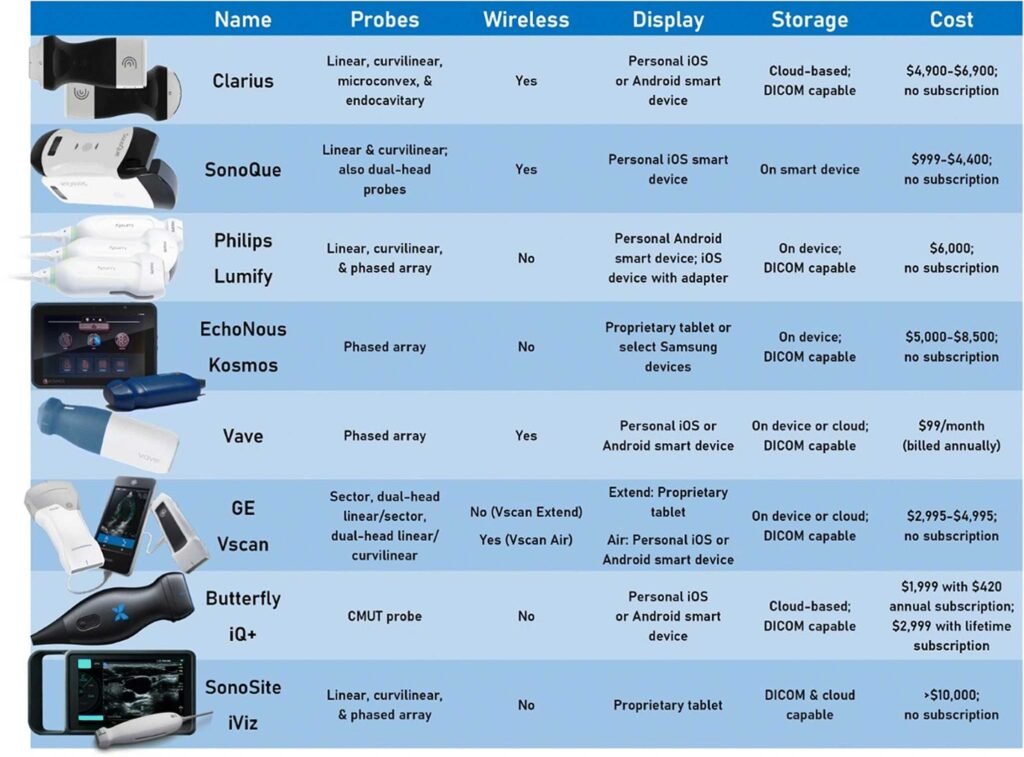
- Butterfly IQ+: Cost- $3500 or $2,700 plus $420/annually
The Butterfly IQ+ has clear benefits. It has an easy-to-use interface and a 3-in-one probe.
It also offers great cloud storage at a lower cost than other devices. Image quality is a major issue for 89% of users in a study. Also, 60% of users did not like the probe size.
- VScan Air SL: Cost- $4,500
The VScan Air costs a bit more than the Butterfly IQ+. It offers good image quality and an easy-to-use interface. It also has a 2-in-one probe.
It also offers wireless connectivity, but connectivity issues are the top complaint. Some users also disliked the probe size or shape.
- Mindray TE Air: Cost-$6,000 to $8,000
The Mindray TE is the most expensive option on our list. Many users highly rate it for its image quality, wireless connectivity, and probe size. However, its difficult-to-use interface and lack of a linear probe distract some users.

Application Flexibility
The application flexibility you need depends heavily on your specialty or facility. Some medical professionals need a device for a specific specialty. Others need a solution for many different uses. Each option has specific features that affect how users apply it.
- Butterfly IQ+: Butterfly’s 3-in-1 probe makes it flexible for use across multiple health conditions and requirements. The probe also includes several exam presets, making it easy to use. Ample cloud storage makes it ideal for storing and sharing multiple images.
Butterfly’s software needs a subscription, but it is helpful for new users. Its split-screen features and diagnostic tools are also useful.
The probe connects to the tablet with a wire. This device needs a longer charge time. This can make it harder to use flexibly.
- VScan Air SL: VScan’s 2-in-1 linear probe offers flexibility. It can use either a curvilinear or phased array for different conditions. While the 2-in-1 probe doesn’t have all the features of a 3-in-1, novice sonographers can prefer to have fewer settings.
The VScan has many features that make it great for different uses. Lightweight, connect wirelessly, and charges quickly.
- Mindray TE Air: Mindray needs users to have extra probes to switch between phased array and linear probes. This is necessary for the same application flexibility. However, its Piezoelectric technology delivers image quality similar to cart-based systems. As a result, it received the highest ratings for cardiac images, making it ideal for cardiac specialists.
The Mindray TE Air has extra features that add flexibility. It includes wireless connectivity, a lightweight design, and a quick charge time.
Each portable ultrasound in our review has several scanning modes. This gives users flexibility for many different needs.

Improving Patient Care with the Right Handheld Ultrasound Device for PoC
Advanced technology gives great image quality and is easy to use. This makes handheld portable ultrasound devices perfect for many medical fields. Doctors are diagnosing more patients with serious health conditions.
As care moves toward Point of Care (PoC) treatment, these devices can help. They enable quick diagnosis and more accurate care. This leads to better patient outcomes.
These systems can provide real-time imaging in almost any setting. This capability improves patient care, from emergency response to ongoing treatment.
Medical professionals have many options. They must decide which features matter most. This helps them choose the right device for their practice.
Our comparison of the best portable ultrasound for doctors offers valuable insight into three top handheld ultrasounds. You can see the features and benefits of three systems: Butterfly IQ+, VScan Air SL, and Mindray TE Air. Each system has strong results. Comparing each system’s features, ease of use, and cost can help you choose the best fit for your medical practice.

 English
  Spanish
  French
  German
  Portuguese
  Dutch
Dutch